
The Ultimate Guide to Micro-Investing
Micro-investing is revolutionizing the way individuals approach investing by allowing them to invest small amounts of money. In an era where financial literacy is crucial, micro-investing plays a significant role in democratizing access to investment opportunities. This guide will explore the intricacies of micro-investing, its benefits, how it works, and how you can get started.
What is Micro-Investing?
Definition
Micro-investing refers to the practice of investing small amounts of money, often through digital platforms or apps. This approach enables individuals to gradually build their investment portfolios without needing large sums of capital.
Key Features
Small Investment Amounts: Users can start investing with as little as a few dollars.
Fractional Shares: Allows investment in portions of stocks or ETFs, making high-priced assets accessible.
User-Friendly Platforms: Most micro-investing platforms are designed for ease of use, catering to beginners.
Historical Context
The concept of micro-investing gained traction with the rise of fintech companies in the 2010s. As technology advanced, investment platforms began to cater to a broader audience, breaking down barriers associated with traditional investing.
How Does Micro-Investing Work?
Mechanism
Micro-investing operates through apps and online platforms that facilitate small investments. Users typically link their bank accounts or credit cards to the platform, which allows for automatic investment of spare change or set amounts.
Investment Vehicles
Micro-investing platforms often provide access to:
Stocks: Individual company shares.
ETFs (Exchange-Traded Funds): Collections of stocks or bonds that track an index.
REITs (Real Estate Investment Trusts): Investment in real estate portfolios.
Fractional Shares
Fractional shares enable investors to buy a portion of a share rather than a whole one. For example, if a stock is priced at $100, an investor can purchase $10 worth, which is 0.1 of a share. This feature makes investing in high-value stocks more accessible.
Automated Investing
Many micro-investing platforms utilize robo-advisors, which are automated services that create and manage investment portfolios based on user preferences and risk tolerance. This feature simplifies the investment process for beginners.
Benefits of Micro-Investing
Accessibility
Micro-investing makes investing available to everyone, regardless of financial background. Individuals can start building wealth with minimal funds, encouraging a culture of saving and investing.
Financial Literacy
By engaging in micro-investing, users can learn about financial markets, investment strategies, and portfolio management. This promotes a better understanding of personal finance.
Building Wealth Gradually
Investing small amounts regularly can lead to significant wealth accumulation over time. The power of compound interest allows even minor investments to grow substantially.
Diversification
Micro-investing encourages diversification by allowing users to spread their investments across various assets. This reduces risk and improves the potential for returns.
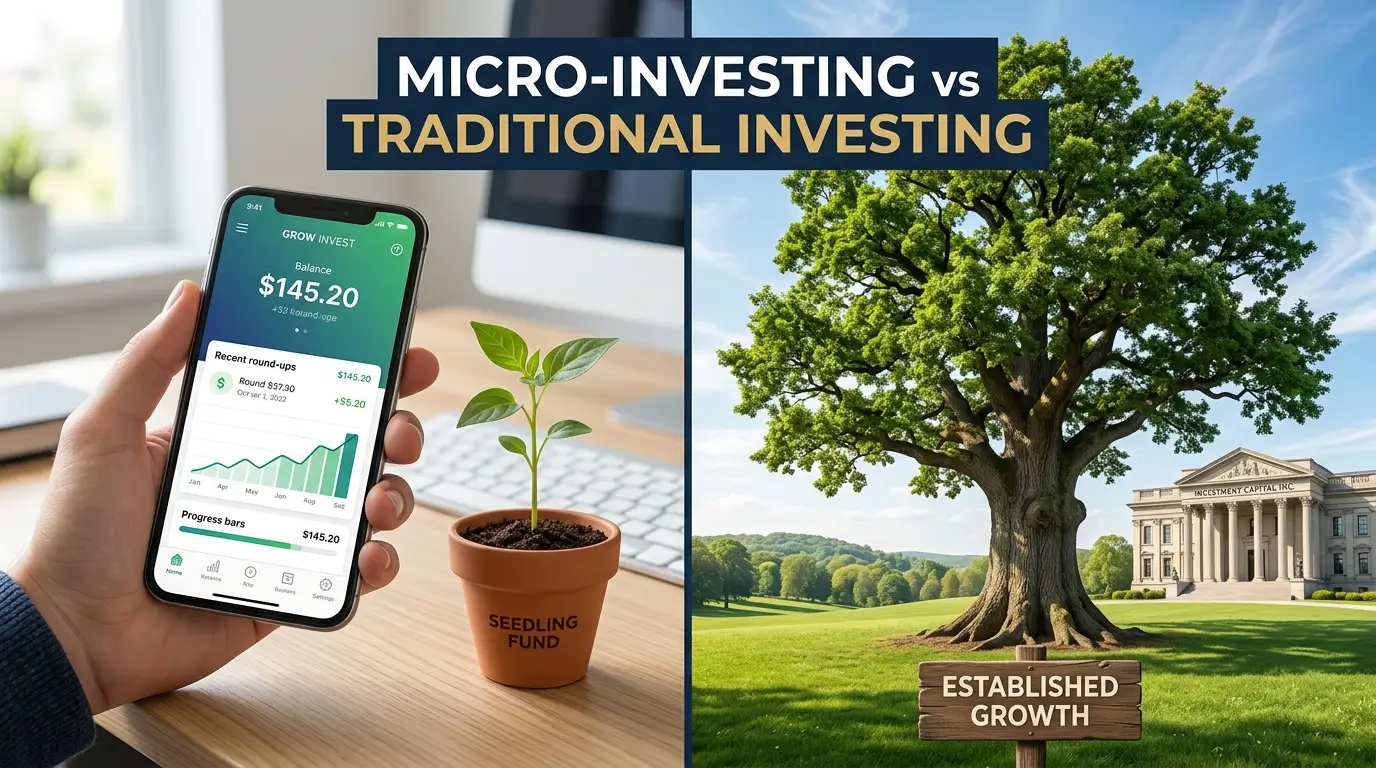
Micro-Investing vs Traditional Investing

| Feature | Micro-Investing | Traditional Investing |
|---|---|---|
| Minimum Investment | Often as low as $5-$10 | Typically requires $1,000 or more |
| Investment Options | Stocks, ETFs, REITs | Stocks, bonds, mutual funds |
| Accessibility | High (apps available to all) | Moderate (may require broker access) |
| Management | Often automated (robo-advisors) | Usually manual or managed by advisors |
| Risk Level | Generally lower due to diversification | Varies based on investment choices |
Investment Strategies
There is a fundamental difference in micro investing vs traditional investing. Micro-investing strategies often focus on gradual growth and diversification, while traditional investing may involve larger, more aggressive strategies, such as day trading or concentrated investments in specific sectors.
Risk Assessment
Micro-investing typically involves lower risk due to smaller amounts invested and the ability to diversify easily. Traditional investing can carry higher risks, particularly if large sums are invested in volatile assets.
Popular Micro-Investing Platforms
Overview of Top Platforms
Robinhood: Offers commission-free trades and fractional shares.
Acorns: Rounds up purchases to invest spare change.
Stash: Allows users to invest in fractional shares and offers personalized investment advice.
Wealthfront: Focuses on automated investing and tax-efficient strategies.
Comparison Chart
| Platform | Fees | Investment Options | Unique Feature |
|---|---|---|---|
| Robinhood | $0 | Stocks, ETFs | Commission-free trading |
| Acorns | $1-$3/month | ETFs | Round-up feature |
| Stash | $1-$9/month | Stocks, ETFs | Personalized investment advice |
| Wealthfront | 0.25%/year | ETFs | Automated tax-loss harvesting |
User Testimonials
Robinhood User: "I love how easy it is to trade and invest small amounts without worrying about fees."
Acorns User: "The round-up feature helps me save and invest without even thinking about it."
How to Start Micro-Investing
Step-by-Step Guide
Assess Your Financial Goals: Determine what you want to achieve through investing.
Choose the Right Micro-Investing App: Research platforms and select one that fits your needs.
Set Up Your Account: Follow the app's instructions to create and fund your account.
Start Investing Small Amounts: Begin with a comfortable amount and gradually increase as you learn.
How Much Money Do You Need?
Many micro-investing platforms allow you to start with as little as $5-$10. This low barrier to entry makes it accessible for virtually anyone.
Common Mistakes to Avoid
Neglecting Research: Always understand what you are investing in.
Focusing Solely on Returns: Consider risk and diversification, not just potential profits.
Overtrading: Frequent buying and selling can lead to unnecessary fees and losses.
Risks of Micro-Investing
Potential Risks
While micro-investing offers several benefits, it is not without risks. Users should be aware of market volatility, which can impact small investments.
Market Volatility
Small investments can be affected by market fluctuations. It's essential to maintain realistic expectations and understand that losses can occur.
Can You Lose Money?
Yes, like any investment, there is a risk of losing money with micro-investing. It's crucial to invest wisely and diversify your portfolio to mitigate risks.
Frequently Asked Questions (FAQ)
What is micro-investing?Micro-investing involves investing small amounts of money, often through apps, to build wealth gradually.
How does micro-investing work?Users can link their bank accounts to investment platforms, allowing for automatic investments of spare change or set amounts.
What are the benefits of micro-investing?It promotes accessibility, financial literacy, gradual wealth building, and diversification.
Is micro-investing a good idea?Yes, especially for beginners and those looking to build wealth without a large initial investment.
What platforms offer micro-investing?Popular platforms include Robinhood, Acorns, Stash, and Wealthfront.
How much money do I need to start micro-investing?Many platforms allow you to start with as little as $5-$10.
Can I lose money with micro-investing?Yes, there is always a risk of loss in investing, regardless of the amount.
What is the difference between micro-investing and traditional investing?Micro-investing focuses on small amounts and accessibility, while traditional investing often requires larger sums and can involve more complex strategies.
How do I choose a micro-investing app?Consider factors such as fees, investment options, and user experience when selecting a platform.
What are the risks of micro-investing?Risks include market volatility and the potential for loss, similar to traditional investing.
Conclusion
Micro-investing is an innovative approach that democratizes access to investment opportunities. By allowing individuals to invest small amounts, it fosters financial literacy and encourages wealth building. As you embark on your micro-investing journey, remember to research, set clear financial goals, and start small. The world of investing is at your fingertips, and with micro-investing, it's easier than ever to take that first step toward financial growth.
Additional Resources
Recommended Books and Articles on Investing:
The Intelligent Investor by Benjamin Graham
A Random Walk Down Wall Street by Burton Malkiel
Links to Financial Literacy Resources:
Contact Information for Financial Advisors:
Consider reaching out to local financial advisors or using platforms like XY Planning Network for personalized advice.