
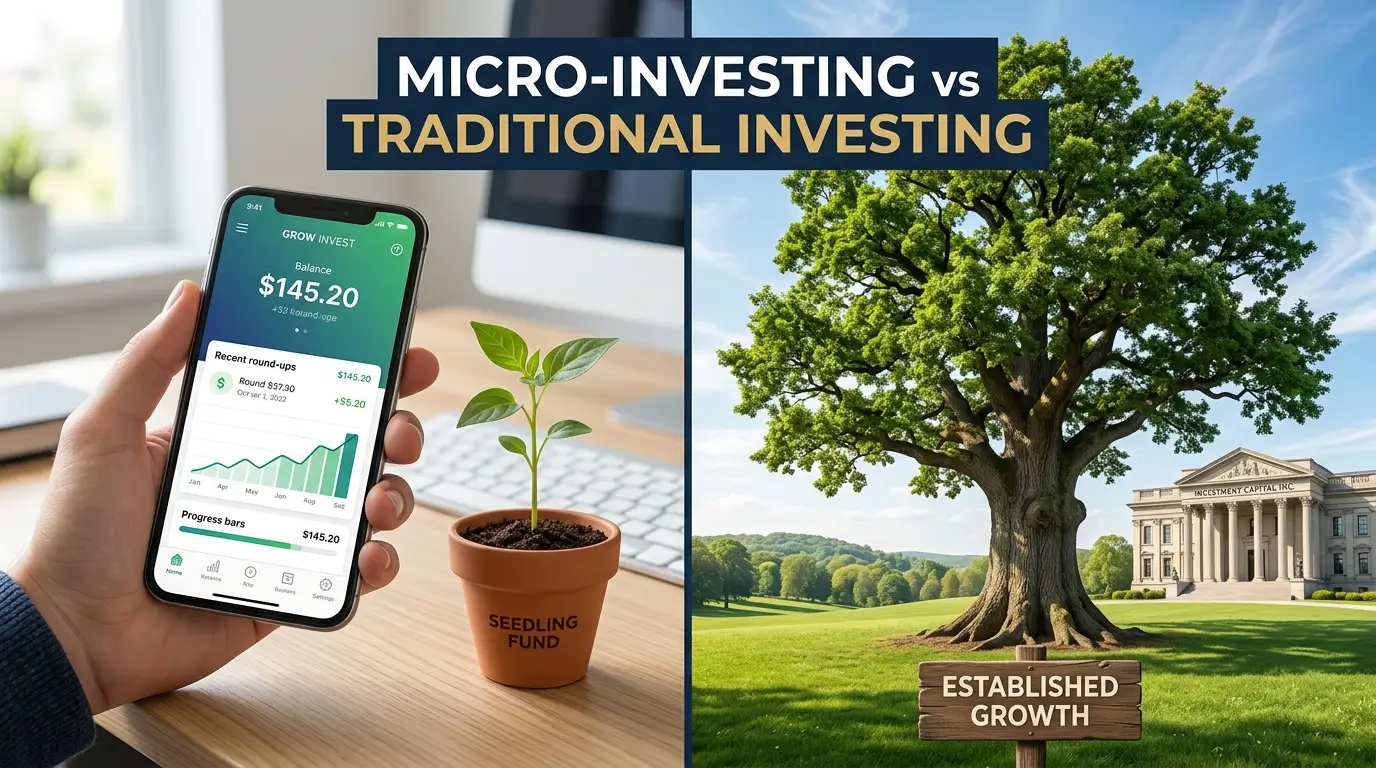
Micro-Investing vs Traditional Investing: A Comprehensive Comparison
In today's financial landscape, the choice between micro-investing and traditional investing is becoming increasingly relevant. Micro-investing allows individuals to invest small amounts of money, often through user-friendly apps, while traditional investing encompasses a broader array of methods that typically require larger capital. Understanding both methods is crucial for making informed financial decisions that align with individual goals and risk tolerance.
What is Micro-Investing?
Definition and Concept
Micro-investing is a modern investment strategy that enables individuals to invest small amounts of money, often as little as $5, into various financial assets. This approach makes investing accessible to those who may not have substantial capital to start with. Micro-investing platforms often round up purchases to the nearest dollar and invest the spare change, allowing users to build a portfolio gradually without feeling the pinch.
How it Works
Micro-investing primarily operates through mobile apps that facilitate small incremental investments. These platforms often provide automated features, allowing users to set up recurring investments or round-up transactions to invest spare change. This simplicity appeals to beginners who may feel intimidated by traditional investing methods.
Popular Micro-Investing Platforms
Several platforms have emerged as leaders in the micro-investing space:
| Platform | Features | Benefits |
|---|---|---|
| Acorns | Round-ups, diversified portfolios, automated rebalancing | Easy to use, promotes saving habits |
| Robinhood | Commission-free trading, fractional shares, user-friendly interface | Accessible for beginners, no trading fees |
| Betterment | Robo-advisor services, personalized financial planning | Automated investment management, goal-oriented |
| Stash | Educational resources, customizable portfolios | Empowers users to learn while investing |
What is Traditional Investing?
Definition and Concept
Traditional investing refers to established methods of investing that typically involve larger sums of money and a deeper understanding of the financial markets. This includes purchasing assets like stocks, bonds, mutual funds, and exchange-traded funds (ETFs). Traditional investing often requires a more hands-on approach and a commitment to understanding market trends.
Key Traditional Investment Platforms
Numerous platforms facilitate traditional investing, each offering unique services:
| Platform | Services Offered | Fees and Minimums |
|---|---|---|
| Fidelity | Wide range of investment options, research tools | No minimum for brokerage accounts |
| Charles Schwab | Comprehensive investment services, robo-advisory | No minimum for brokerage accounts |
| Vanguard | Low-cost index funds, retirement accounts | Minimums vary by fund |
| E*TRADE | Advanced trading tools, educational resources | No minimum for brokerage accounts |
Micro-Investing vs Traditional Investing
Accessibility and Ease of Use
Micro-investing platforms are designed with beginners in mind, offering intuitive interfaces and simplified investment processes. In contrast, traditional investing often involves navigating complex financial products and strategies, which can be daunting for new investors.
Investment Strategies
Micro-investing strategies typically focus on:
Fractional Shares: Allowing users to buy portions of shares, making high-value stocks accessible.
Automated Investing: Using algorithms to manage investments based on user preferences.
Traditional investing strategies often include:
Portfolio Diversification: Spreading investments across various asset classes to mitigate risk.
Active vs Passive Management: Choosing between actively managed funds or passive index funds.
Costs and Fees
| Feature | Micro-Investing | Traditional Investing |
|---|---|---|
| Minimum Investment Requirement | Low (often $5 or less) | Higher (often $1,000 or more) |
| Fees | Subscription or transaction fees | Management fees, commissions |
| Expense Ratios | Generally lower | Can vary widely |
Risk Management
Micro-investing carries risks such as limited growth potential and reliance on technology. However, it often promotes a disciplined saving habit. On the other hand, traditional investing involves market risks and requires active monitoring, but it allows for more personalized risk management strategies through diversification.
Potential Returns
Historically, traditional investing has offered higher returns over the long term compared to micro-investing. For instance, investing in a diversified portfolio of stocks has typically yielded an average annual return of about 7-10%. Micro-investing, while beneficial for beginners, may not yield the same growth due to the smaller amounts being invested.
Benefits of Micro-Investing
Low Barrier to Entry
Micro-investing platforms allow individuals to start investing with minimal funds, making it accessible for those who may not have large sums to invest.
Simplicity and Automation
The ease of use associated with investment apps and automated features simplifies the investment process, encouraging more people to start investing.
Behavioral Benefits
Micro-investing can help cultivate positive financial habits by promoting regular saving and investing behaviors, which can lead to significant long-term growth.
Access to Diversification
Even with minimal investments, micro-investing platforms often provide users with diversified portfolios, reducing risk and enhancing potential returns.
Drawbacks of Micro-Investing
Limited Growth Potential
One major drawback of micro-investing is the limited potential for growth compared to traditional investing. Smaller investments may not generate substantial returns over time.
Platform Fees
While many micro-investing platforms advertise low fees, users may still encounter subscription fees or transaction fees that can eat into their returns.
Over-Simplification
There is a risk of over-relying on technology and automation, potentially leading to a lack of understanding of investment fundamentals.
Benefits of Traditional Investing
Potential for Higher Returns
Traditional investing strategies often offer the potential for higher returns due to larger initial investments and the ability to take advantage of market fluctuations.
Comprehensive Financial Planning
Investors can create a well-rounded investment strategy that aligns with their long-term financial goals, including retirement planning and wealth accumulation.
Greater Control and Customization
Traditional investing allows for greater control over investment choices, enabling investors to tailor their portfolios according to their financial goals and risk tolerance.
Drawbacks of Traditional Investing
Higher Costs
Traditional investing often involves higher costs, including management fees and minimum investment requirements, which can be prohibitive for some investors.
Complexity and Learning Curve
The intricacies of financial markets can pose challenges for beginners, making it essential to invest time in learning before diving into traditional investing.
Is Micro-Investing Safe?
Micro-investing platforms generally employ robust security measures, including encryption and two-factor authentication, to protect user data and funds. However, they may not offer the same level of investor protection as traditional investment accounts, which are often insured by organizations like the SIPC.
Can I Make Money with Micro-Investing?
Yes, individuals can make money with micro-investing, but it is essential to set realistic expectations. While there are success stories of individuals who have built substantial portfolios through micro-investing, the returns may not match those of traditional investing methods.
Which is Better for Beginners?

When considering micro-investing vs traditional investing for new investors, it is crucial to assess personal financial goals and risk tolerance. Micro-investing may be more suitable for beginners looking to dip their toes into the investment world without significant financial risk. In contrast, traditional investing might be better for those ready to commit to larger investments and a more comprehensive understanding of the market.
Frequently Asked Questions (FAQ)
What are the best micro-investing apps?
Popular choices include Acorns, Robinhood, Betterment, and Stash, each offering unique features and benefits.
How much money do I need to start micro-investing?
Many micro-investing platforms allow you to start with as little as $5.
Is micro-investing a good idea?
For beginners or those with limited funds, micro-investing can be a great way to start building an investment portfolio.
What are the risks of traditional investing?
Traditional investing carries market risks, including the potential for loss, and requires a deeper understanding of financial markets.
How do fees compare between micro-investing and traditional investing?
Micro-investing typically has lower fees but may include subscription costs, while traditional investing may involve higher management fees and minimum investment requirements.
Conclusion
In conclusion, both micro-investing and traditional investing offer unique advantages and drawbacks. Micro-investing is an excellent entry point for beginners looking to start their investment journey with minimal funds, while traditional investing provides opportunities for higher returns and greater control. Ultimately, the choice between the two methods should be based on individual financial goals, risk tolerance, and investment knowledge. By understanding the nuances of each approach, investors can make informed decisions that best suit their financial futures.