
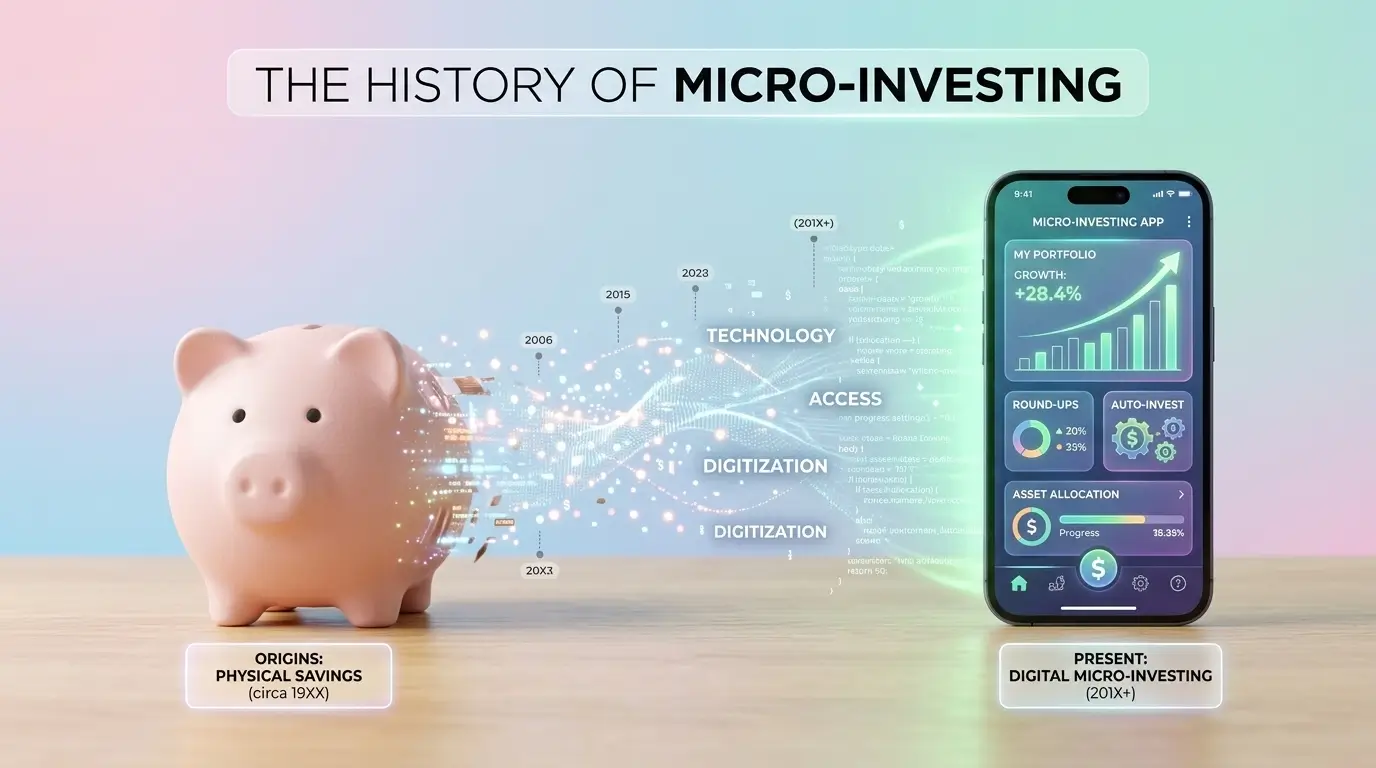
The History of Micro-Investing: How Spare-Change Apps Became Mainstream
Micro-investing has revolutionized the way individuals engage with financial markets. By enabling users to invest small amounts of money, micro-investing democratizes access to investment opportunities that were once reserved for the wealthy. Understanding the history of micro-investing is crucial as it highlights the evolution of investment accessibility and the changing landscape of personal finance.
What is Micro-Investing?
Micro-investing refers to the practice of investing small sums of money, often through digital platforms, allowing individuals to build their investment portfolios gradually. Unlike traditional investing, which typically requires larger capital outlays, micro-investing enables users to invest as little as a few dollars.
Comparison with Traditional Investing
| Aspect | Traditional Investing | Micro-Investing |
|---|---|---|
| Minimum Investment | Often $1,000 or more | As little as $5 or $10 |
| Investment Vehicles | Stocks, bonds, mutual funds | Fractional shares, ETFs |
| Accessibility | Limited to affluent individuals | Open to everyone |
| Fees | Often high commissions | Low or no fees |
Key Features
Small Amounts: Allows investments of minimal amounts, making it accessible to a broader audience.
Fractional Shares: Users can buy portions of shares, enabling investment in high-value stocks without needing significant capital.
Automated Contributions: Many platforms offer features like round-ups, where spare change from purchases is invested automatically.
The Evolution of Micro-Investing
Pre-Micro-Investing Era
Historically, traditional investing methods posed significant barriers to entry for retail investors. High minimum investments, complex processes, and substantial fees often excluded many individuals from participating in the stock market.
The Birth of Micro-Investing
The concept of micro-investing began to take shape in the early 2000s, driven by the need for greater financial inclusion. Pioneers like Betterment and Wealthfront introduced automated investment platforms, laying the groundwork for micro-investing.
Case Study: The Introduction of Fractional Shares
The introduction of fractional shares in the mid-2010s marked a significant milestone. This innovation allowed investors to purchase a fraction of a share, making it possible to invest in high-priced stocks like Amazon or Berkshire Hathaway with minimal capital.
The Rise of Micro-Investing Platforms
The launch of platforms such as Acorns, Robinhood, and Stash in the 2010s significantly boosted the popularity of micro-investing. These platforms leveraged technology to simplify the investment process and attract new investors.
Acorns (2012): Pioneered spare change investing, automatically rounding up purchases to the nearest dollar and investing the difference.
Robinhood (2013): Disrupted the industry by offering commission-free trading, appealing to younger investors.
Stash (2015): Combined micro-investing with financial education, allowing users to invest in fractional shares while learning about personal finance.
The FinTech Revolution
The FinTech revolution has transformed investing by making it more accessible and user-friendly. The rise of robo-advisors and investment apps has empowered individuals to take control of their financial futures. This democratization of finance has led to an increase in retail investors participating in the market, particularly during economic downturns and crises, such as the COVID-19 pandemic.
Key Milestones in Micro-Investing History

| Year | Milestone | Description |
|---|---|---|
| 2012 | Launch of Acorns | Introduction of spare change investing |
| 2013 | Emergence of Robinhood | Commission-free trading for retail investors |
| 2015 | Introduction of fractional shares | Making investing more accessible |
| 2017 | Growth of investment apps | Rise of user-friendly platforms |
| 2020 | COVID-19 impact | Surge in retail investing and micro-investing popularity |
Benefits of Micro-Investing
Micro-investing offers several advantages, including:
Low Barrier to Entry: Individuals can start investing with minimal capital, making it accessible to a wider audience.
Encouragement of Financial Literacy: Many platforms incorporate educational resources, fostering better investment habits.
Access to Diversified Portfolios: Users can invest in diversified portfolios without needing significant capital.
Automation and Simplicity: Features like round-ups and automated contributions simplify the investment process.
Risks and Challenges of Micro-Investing
While micro-investing has its benefits, it also presents certain risks and challenges:
Limited Growth Potential: Small investments may yield lower returns compared to larger, more strategic investments.
Platform Fees: Some micro-investing platforms charge fees that can eat into returns, particularly for small accounts.
Over-Simplification of Investment Strategies: The ease of use may lead to hasty investment decisions without thorough research.
Technology Dependence: Increased reliance on technology raises concerns about security and data privacy.
How Micro-Investing Works
Micro-investing platforms typically operate through a user-friendly app or website, allowing investors to easily manage their portfolios.
Overview of the Investment Process
Sign Up: Users create an account and link their bank accounts.
Set Preferences: Investors can customize their investment goals and risk tolerance.
Automated Contributions: Many platforms offer features like round-ups to invest spare change automatically.
Portfolio Management: Users can track their investments and make adjustments as needed.
Common Features
Round-Ups: Automatically invest the spare change from everyday purchases.
Automated Contributions: Set recurring investments to build wealth over time.
Diversified Portfolios: Access to a range of investment options, including ETFs and stocks.
Investment Strategies for Micro-Investors
Micro-investors can adopt various strategies, such as dollar-cost averaging, where they invest a fixed amount regularly, or thematic investing, where they focus on specific sectors or trends.
The Future of Micro-Investing
As technology continues to evolve, the future of micro-investing looks promising. Emerging trends include:
Increased Personalization: Advances in AI will allow for more tailored investment strategies based on individual preferences and goals.
Integration with Other Financial Services: Micro-investing platforms may integrate with banking and budgeting tools, providing a holistic financial management solution.
Regulatory Changes: Potential regulatory changes from entities like the SEC could impact how micro-investing platforms operate, emphasizing the importance of investor protection.
Frequently Asked Questions (FAQ)
What platforms offer micro-investing?
Popular micro-investing platforms include Acorns, Robinhood, Stash, Betterment, and Wealthfront. Each offers unique features tailored to different user needs.
Is micro-investing safe?
Micro-investing platforms generally implement robust security measures. However, like all investments, there are risks involved, and users should ensure they choose reputable platforms.
How does micro-investing work?
Micro-investing works by allowing users to invest small amounts of money through digital platforms, often utilizing features like round-ups and automated contributions to build portfolios over time.
What are the pros and cons of micro-investing?
Pros: Low barrier to entry, encouragement of financial literacy, access to diversified portfolios, and simplicity. Cons: Limited growth potential, platform fees, oversimplification of strategies, and technology dependence.
Who invented micro-investing?
While there isn't a single inventor of micro-investing, key figures and companies like Betterment and Acorns played significant roles in its development and popularization.
Conclusion
The history of micro-investing reflects a significant shift in the investment landscape, making it more accessible to the masses. As technology continues to advance, micro-investing will likely evolve further, offering new opportunities for individuals to grow their wealth. Understanding this history not only highlights the importance of micro-investing in modern finance but also encourages individuals to explore these options for their financial futures.
Call to Action
Have you tried micro-investing? Share your experiences in the comments below! For further learning about investment strategies, check out resources like financial blogs, podcasts, and investment courses to enhance your knowledge and skills.